
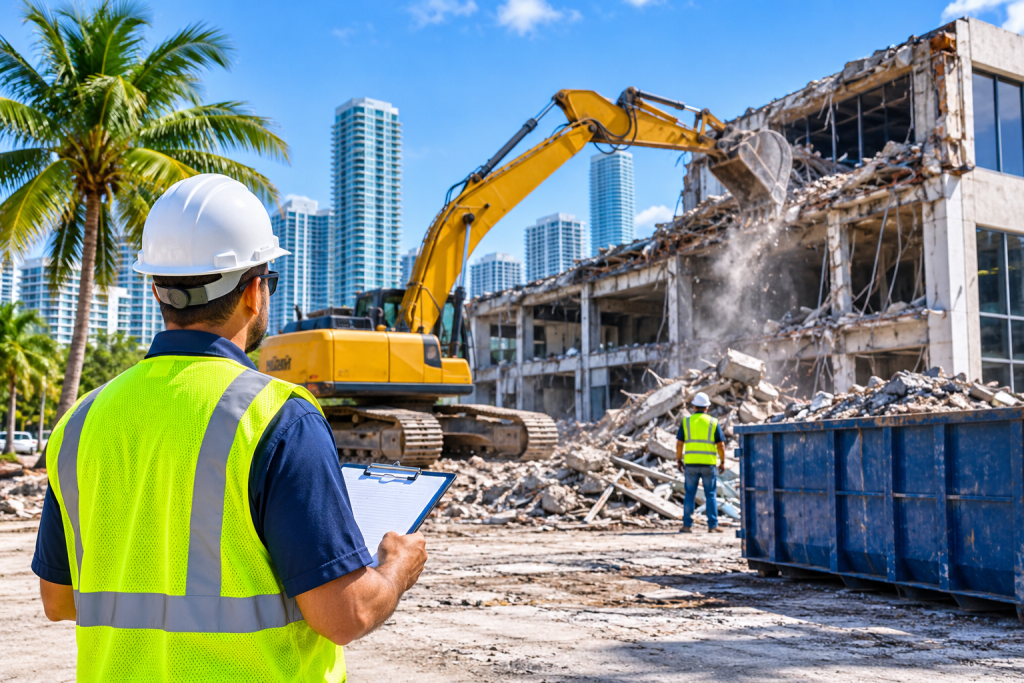
Commercial demolition involves much more than removing walls, fixtures, or an existing structure. Before work begins, contractors must understand the condition of the site, identify potential hazards, coordinate with utility providers, confirm permit requirements, and establish a clear plan for handling demolition debris.
In Miami, these preparations are especially important because projects may take place in busy commercial districts, occupied properties, older buildings, or locations with limited access for equipment and hauling vehicles. A delay in one part of the preparation process can affect the entire construction schedule.
As a commercial subcontracting firm with experience in demolition and construction labor, we understand how important it is to plan the work before crews arrive. Here are the main considerations project owners, general contractors, and commercial demolition contractors in Miami FL should review before starting a demolition project.
1. Confirm Demolition Permits and Local Requirements
The first step is determining which permits and approvals apply to the property. Commercial demolition work generally requires a building permit, but the exact application process and supporting documents depend on the property’s location and the scope of work.
Miami-Dade County and the City of Miami have separate permitting processes. Other municipalities within the county may have their own requirements as well. Contractors should confirm the property’s jurisdiction before submitting applications or scheduling demolition.
For projects under Miami-Dade County jurisdiction, the county’s demolition permit requirements outline application documents and additional review requirements. These may include site plans, drawings showing the areas to be removed, and information about electrical and plumbing connections.
The project team should also confirm whether separate electrical, plumbing, or other trade permits are necessary. Securing the main demolition permit does not automatically mean every related activity is approved.
We recommend confirming the following before setting a start date:
- Which local authority has jurisdiction over the property?
- What demolition permit and supporting documents are required?
- Are additional trade or environmental approvals necessary?
- Are there restrictions involving trees, sidewalks, streets, or neighboring properties?
- Have all required inspections and notifications been scheduled?
Getting these details settled early helps prevent avoidable interruptions once the project is underway.
2. Assess Hazardous Materials Before Demolition
One of the most important steps in preparing an older commercial building is identifying hazardous materials. Some materials may not be visible during an ordinary walkthrough, and disturbing them without proper assessment can expose workers and nearby occupants to health risks.
Asbestos is a major consideration. It may be present in older insulation, ceiling materials, floor tiles, roofing products, pipe coverings, and other building components. Lead-based paint and other potentially hazardous substances may also require assessment depending on the building’s age and previous use.
Miami-Dade County requires an asbestos survey for demolition projects. Commercial demolition and renovation projects also require environmental review and approval. The county states that the Notice of Demolition or Asbestos Renovation must be submitted at least 10 working days before the start of a regulated project, along with the required survey documentation.
Contractors and property owners can review the county’s asbestos requirements for demolition and renovation before proceeding.
If hazardous materials are identified, the project team should arrange for the appropriate licensed professionals to handle assessment, abatement, and disposal. Demolition crews should not disturb materials that require specialized handling until the necessary work has been completed and the area has been cleared for the next phase.
The U.S. Environmental Protection Agency’s asbestos guidance is also a useful resource for understanding asbestos-related risks and requirements.
3. Coordinate Utility Disconnections
A building may appear inactive, but that does not mean every utility connection has been shut off. Electrical lines, natural gas, water, sewer connections, telecommunications, and other services may still be connected to the structure.
Before demolition begins, the project team should identify all active services and coordinate disconnection with the appropriate utility providers. Depending on the work, some connections may need to be capped, relocated, or protected rather than simply removed.
This step is particularly important for partial demolition. A commercial building may remain operational while one section is being removed. In that situation, contractors must understand which systems serve the demolition area and which must remain active for the occupied portions of the property.
A utility coordination plan should address:
- Electrical service and overhead or underground lines
- Natural gas connections and piping
- Water supply and plumbing lines
- Sewer connections
- Telecommunications and data cables
- Fire protection and alarm systems
- Utilities serving adjacent buildings or shared spaces
The team should obtain confirmation that required disconnections have been completed before demolition starts. If utilities are shared with neighboring properties, additional coordination may be necessary to avoid disrupting other businesses or occupants.
4. Develop a Site-Specific Safety Plan
Every demolition site presents different risks. The building’s structure, surrounding properties, equipment access, overhead hazards, and demolition method all influence how the work should be organized.
Before starting, contractors should inspect the site and determine how workers, equipment, and materials will move through the property. The plan should also identify restricted areas, emergency access points, pedestrian routes, and locations where falling debris or dust could create hazards.
For commercial properties in Miami, site planning may need to account for nearby businesses, pedestrian activity, narrow streets, parking limitations, and neighboring structures. These conditions can affect equipment placement, work hours, deliveries, and debris removal.
A practical safety plan should cover:
- Structural assessment and the planned demolition sequence
- Worker training and personal protective equipment
- Barricades, fencing, and restricted work zones
- Dust and noise control
- Equipment inspection and safe operating procedures
- Emergency response and communication procedures
- Protection of nearby structures and public access areas
Demolition should follow an established sequence rather than relying on crews to decide what to remove as work progresses. The project team should also identify when engineering support or specialized demolition methods are needed.
The OSHA construction demolition standards provide important guidance on preliminary inspections and demolition safety. These requirements should be considered alongside applicable local codes and project-specific safety procedures.
5. Plan Debris Removal and Proper Disposal
Demolition produces different types of waste, including concrete, metal, wood, drywall, glass, roofing materials, fixtures, and general construction debris. Some materials may be suitable for recycling or recovery, while others require special handling and disposal.
A debris management plan should be prepared before demolition begins. It should identify where waste will be collected, how materials will be separated, where containers or dumpsters will be placed, and which facilities are authorized to receive the waste.
This planning matters in Miami because the availability of staging space and access for hauling vehicles can vary significantly between commercial properties. A site with limited space may need scheduled debris pickups to keep work areas clear and prevent materials from accumulating.
Contractors should consider:
- Separating recyclable materials where practical
- Identifying hazardous or regulated waste
- Confirming approved disposal or recycling facilities
- Arranging dumpsters, containers, and hauling schedules
- Keeping access routes clear for workers and emergency vehicles
- Maintaining disposal records when required
Debris should not be left in public areas or placed in unauthorized locations. Proper sorting and removal also help reduce clutter, improve site organization, and make it easier for follow-on trades to begin their work.
6. Coordinate the Demolition Schedule With Other Contractors
Commercial demolition is often one phase of a larger construction or renovation project. Once the existing materials are removed, other trades may need access to the space for framing, drywall installation, electrical work, plumbing, concrete work, or finishing.
That makes coordination essential. The demolition schedule should be connected to the overall construction timeline, not treated as an isolated activity.
For example, removing interior walls may expose electrical or plumbing systems that need to be relocated before new framing begins. A delay in utility work or debris removal can affect the next contractor’s ability to work safely and efficiently.
We recommend holding a pre-demolition coordination meeting with the general contractor, property representative, demolition supervisor, and relevant trade partners.
The discussion should establish:
- The exact areas included in the demolition scope
- The sequence and expected duration of each phase
- Site access and equipment requirements
- Utility shutdown and restoration responsibilities
- Debris removal arrangements
- Inspection and approval milestones
- Handover conditions for the next construction phase
Clear communication helps everyone understand what needs to happen, who is responsible, and when the work area will be ready for the next stage.
7. Prepare for the Unexpected
Even well-planned demolition projects can uncover unexpected conditions. Contractors may find concealed utilities, undocumented structural elements, water damage, deteriorated materials, or building components that differ from the original plans.
When this happens, crews should stop work in the affected area and notify the project supervisor. The team can then assess the condition and determine whether additional inspections, engineering advice, permits, or specialized services are needed.
It is also helpful to establish a process for documenting changes to the demolition scope. Photographs, written reports, and updated site plans can help the project team understand what changed and how it affects the schedule.
A contingency plan does not eliminate unexpected problems, but it gives everyone a clear process for responding without compromising safety or project coordination.
How We Approach Labor and Demolition Coordination at Brigada
At Brigada, we understand that demolition is connected to the larger construction process. The work requires organized crews, clear supervision, and coordination with the people responsible for the next stages of the project.
Our labor and demolition services support commercial construction work that includes demolition, field work, and cleanup. We also provide drywall, painting, and concrete services, which are part of the broader range of work that may follow demolition.
We work with construction teams that need labor support for projects of different sizes. Our approach includes workforce planning and coordination so general contractors can focus on managing the overall project.
For projects in South Florida, our Miami office is located at 1400 SW 27th Avenue, Suite 102, Miami, FL 33145.
Frequently Asked Questions
1. Do commercial demolition projects in Miami require a permit?
Yes. Commercial demolition generally requires a demolition permit from the local authority with jurisdiction over the property. Additional approvals or trade permits may also be necessary depending on the building, location, and scope of work.
2. Is an asbestos inspection required before commercial demolition in Miami?
Miami-Dade County requires an asbestos survey for demolition projects. Commercial demolition projects also require environmental review and approval. Contractors should confirm the applicable submission and notification requirements before scheduling work.
3. What utilities need to be disconnected before demolition?
Depending on the property, these may include electricity, natural gas, water, sewer, telecommunications, and fire protection systems. The project team should identify all active services and coordinate disconnection or protection with the relevant providers.
4. How is commercial demolition debris handled?
Debris should be sorted according to material type and applicable disposal requirements. Recyclable materials may be recovered, while hazardous or regulated waste must be handled through the appropriate procedures and facilities.
5. How can contractors reduce delays during a commercial demolition project?
Early permit preparation, hazardous materials assessment, utility coordination, site safety planning, and scheduled debris removal can reduce avoidable delays. Regular communication between the general contractor, demolition crew, and follow-on trades also helps keep the project organized.
Final Thoughts
A successful commercial demolition project starts well before the first wall or structure is removed. Permits, hazardous materials assessments, utility disconnections, safety procedures, debris management, and coordination with other contractors all contribute to a controlled and organized worksite.
For construction projects in Miami, taking time to address these details early can help prevent disruptions and prepare the property for its next phase. At Brigada, we believe that organized labor and clear coordination are important parts of keeping commercial construction work moving safely and efficiently.